Understanding Impact on Economic Activity#
Annual National Trends of EVI, NO2, Conflict and Nightlights#
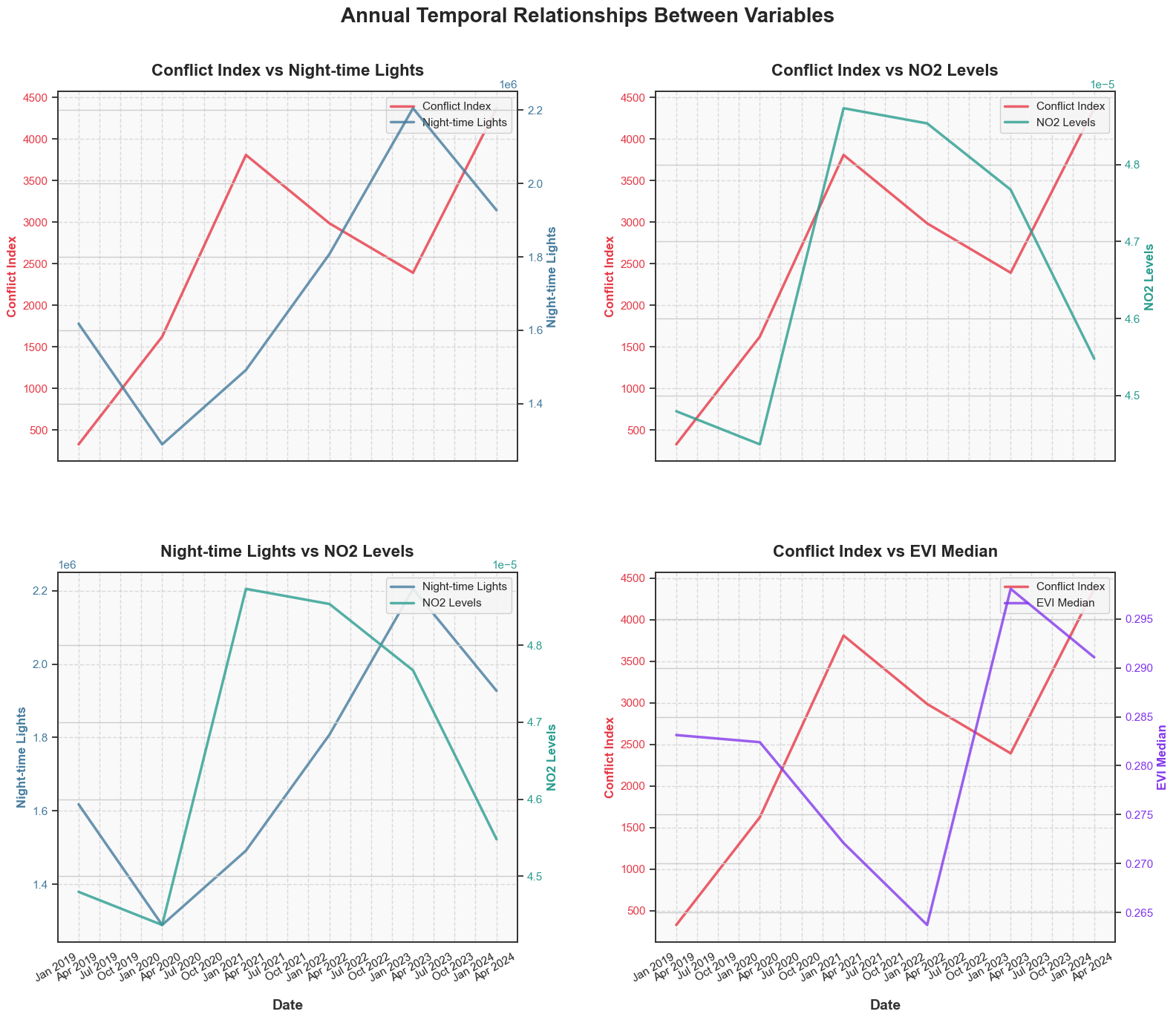
2024 was a reduction in Nightlights, EVI and Air Pollution, while there was an increase in conflict
Conflict and Agriculture Existing literature showing that the Tigray war from 2020-2022 cause a loss in food security in the Amhara region (Muhyie, J. H., et. al., 2025). The fall in EVI in these years could be indicative of that, exacerbated by drought. From 19 May to 21 June 2025, the International Red Cross delieverd seed and fertilizer to the people in Amhara to account for supply chain disruptions to resources for these farmers.
Forecasts and predictions suggested that there would be a conflict and drought-driven loss in agricultural productivity. Although the rain predictions are better than expected, the EVI has fallen which could indicate that conflict has a part to play.
NO2, Manufacturing Activity and Movement NO2 was seen to reduce in Dire Dawa, a manufacturing hub in Ethiopia. It also reduced across the entire country. This could be both because of reduced movement of vehicles and reduction in industrial production.
According to the Ethiopia Statistical Service, the number of imports were higher in 2024 compared to 2023, while the exports increased marginally from August-December 2024.
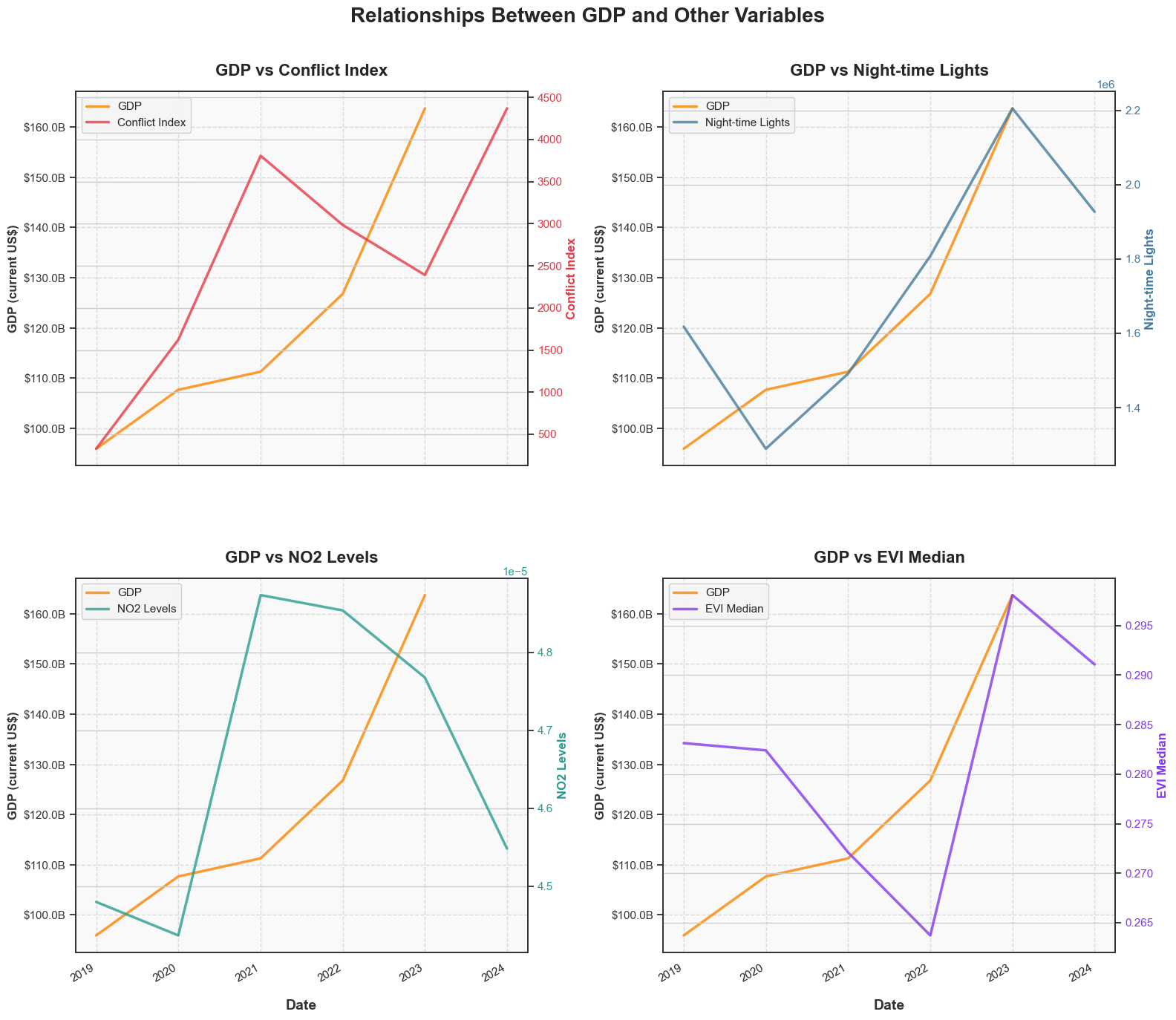
Annual National Trends of EVI, NO2, Conflict and Nightlights with GDP#
Annual Regional Trends in Conflict and EVI#
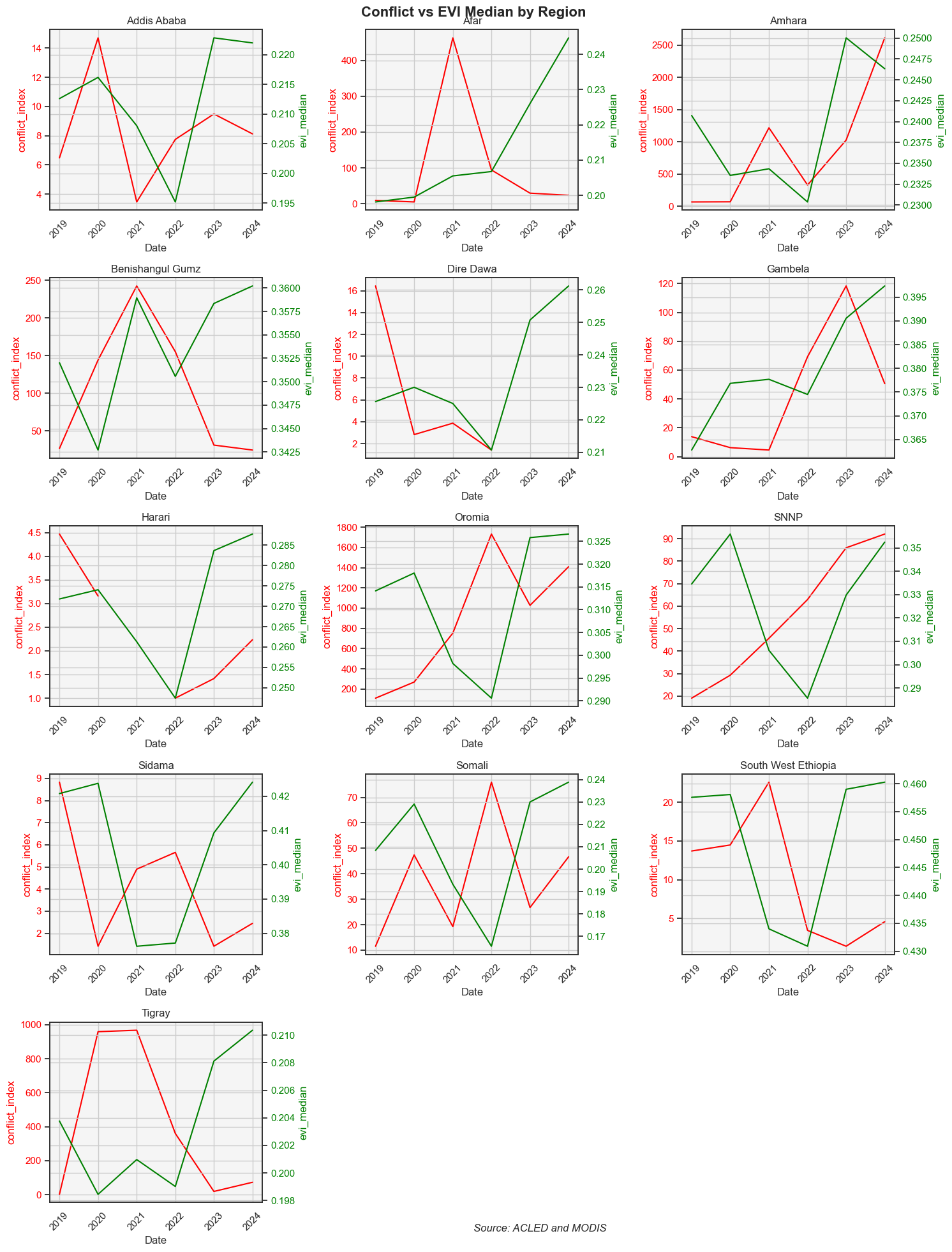
Conflict and EVI in Zones#
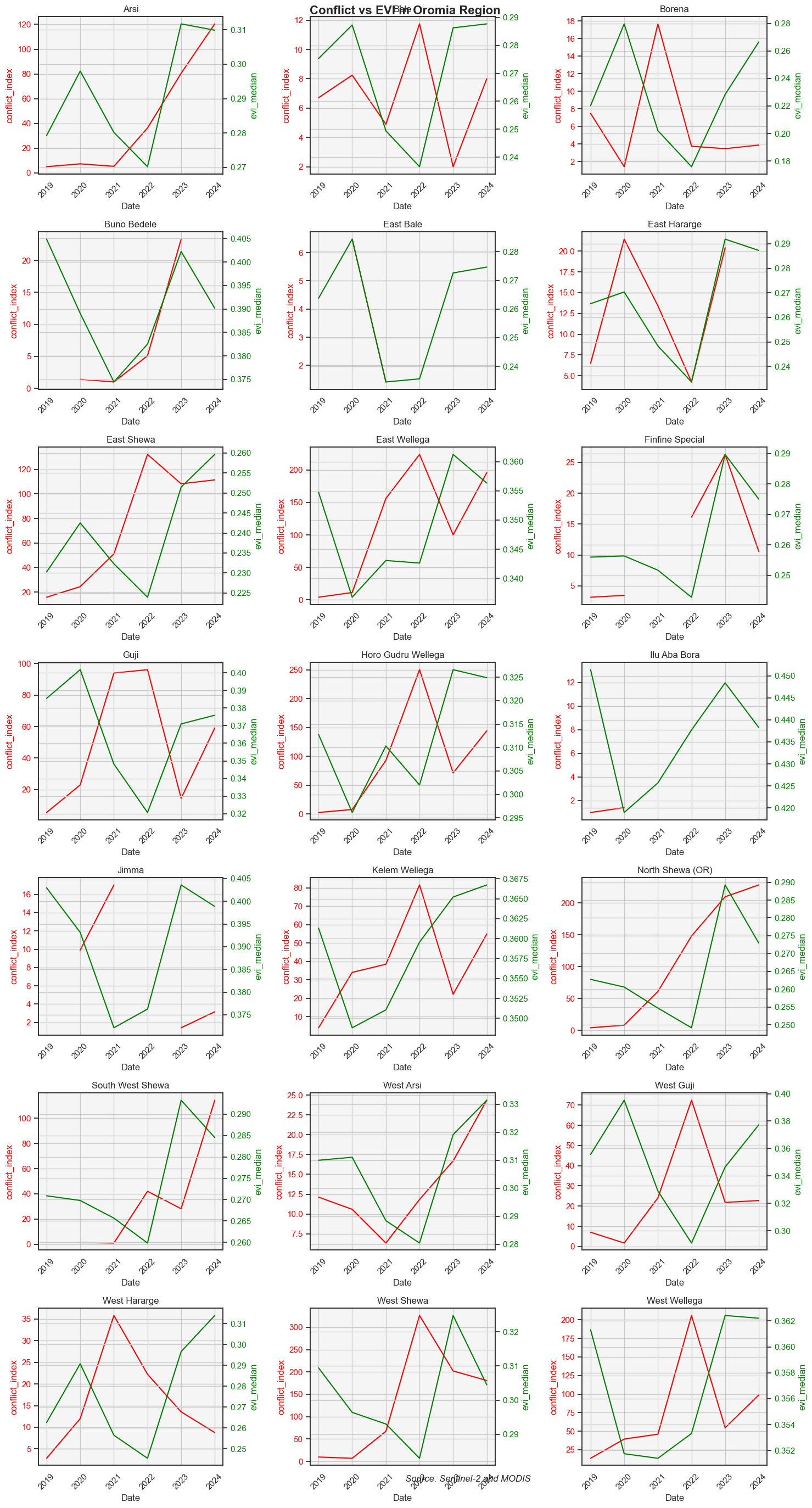
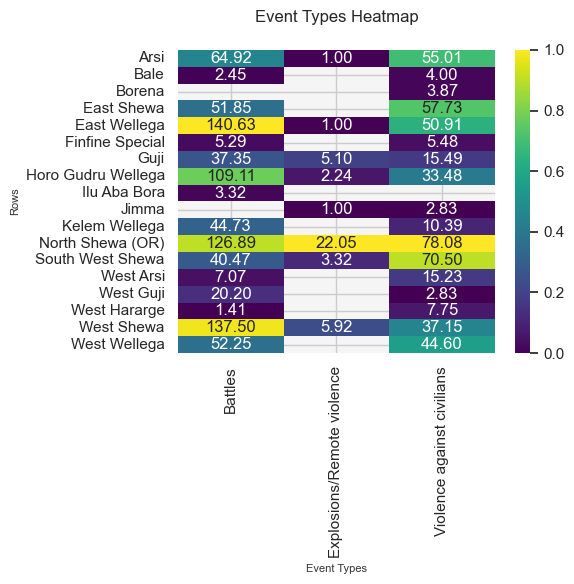
Do the type of conflict events in the region explain the changes in EVI?
Conflict and EVI in Amhara#
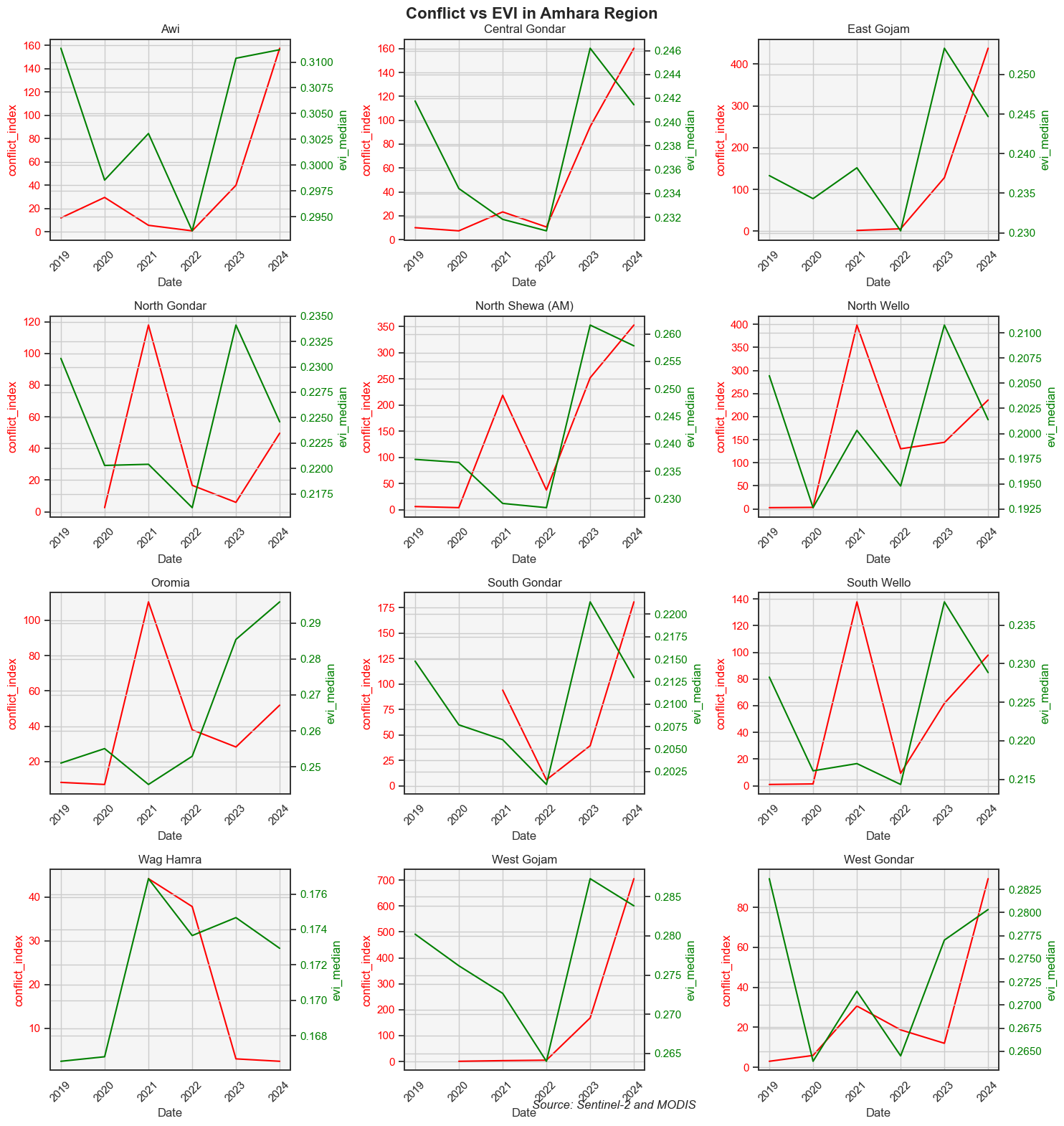
Oromia, Awi and West Gondar did not see a reduction in EVI. Could it be because of a different type of conflict in that region?
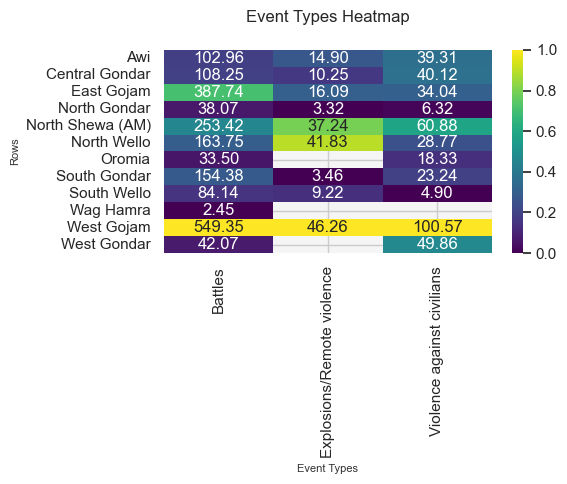
Oromia and West Gondar had lower battle conflict intensity comparatively. However, this doesn’t explain why Awi shows no reduction in EVI.
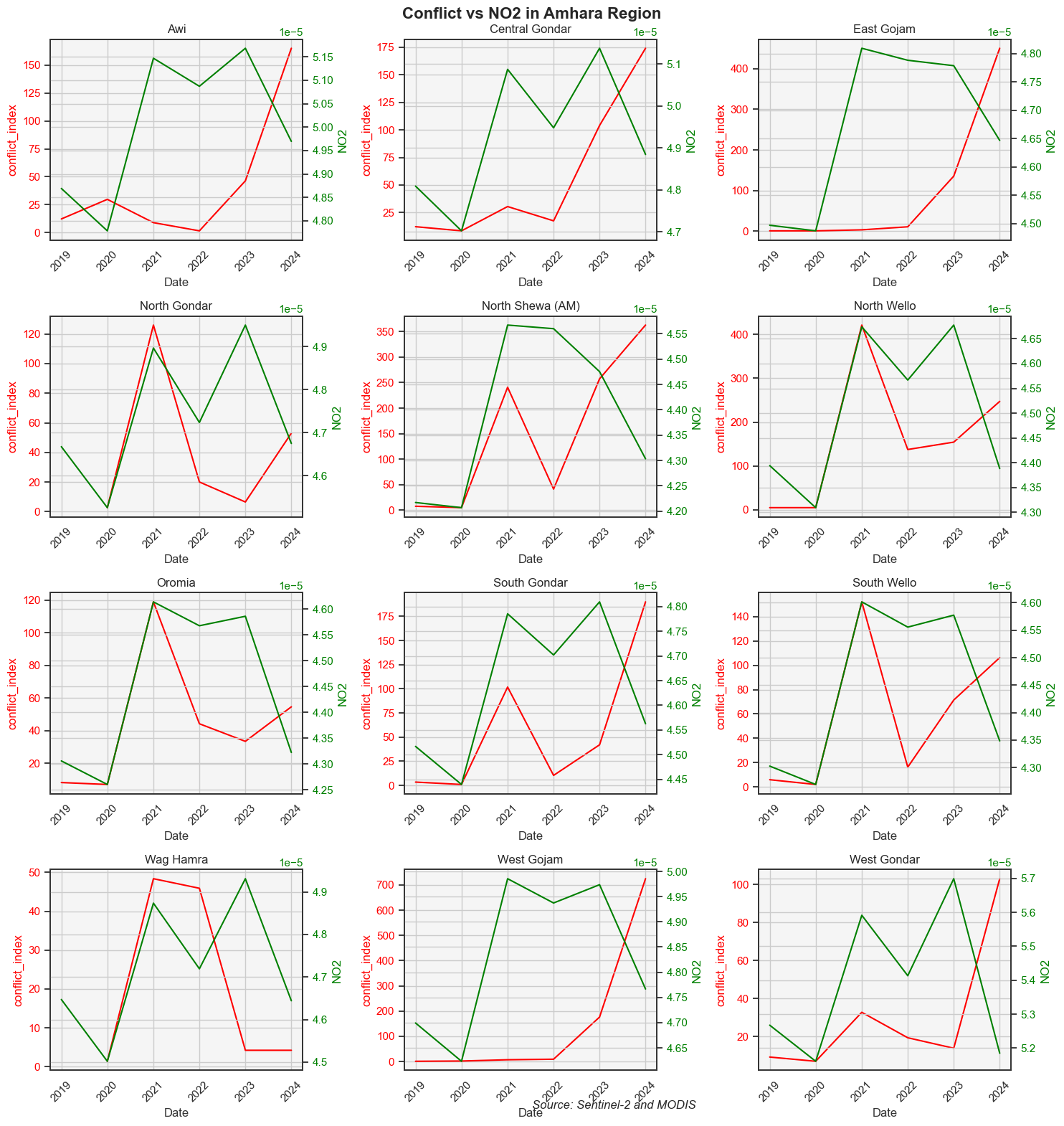
Annual Regional Trends between Conflict and NO2#
Literature shows that conflict could reduce NO2 overall in the country although regional trends may not follow suit.
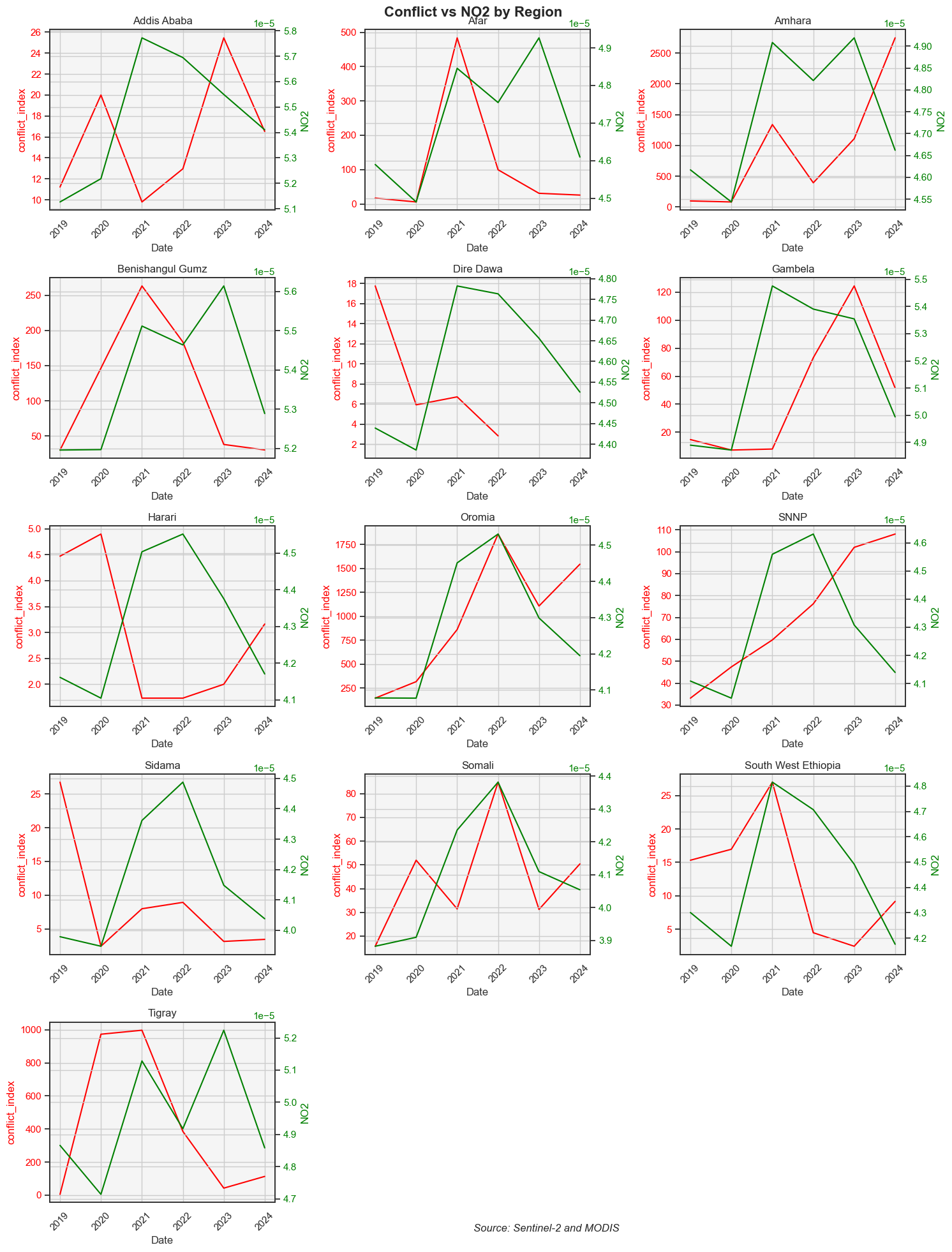
Conflict vs NO2 in Amhara#